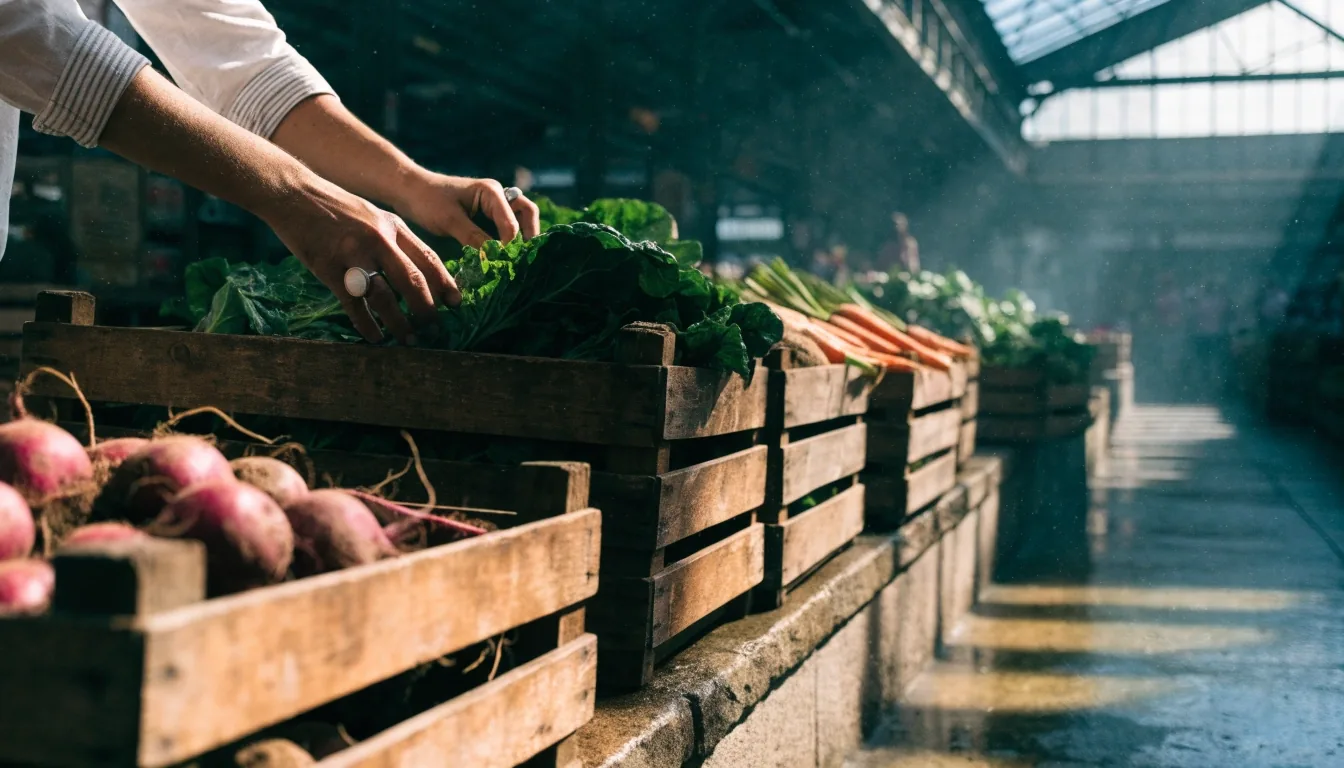
A market rewards knowing what you want to cook more than knowing how to haggle. This page is the practical part: what to look for, how to plan a week, and how to spend less without buying worse.
Market and supermarket, France
Buying vegetables in French markets
Shopping for vegetables in France is a skill you pick up quickly, but a little guidance shortens the learning curve.
Where you are on this page
Wording you can use at the stall, market-bag habits that hold through the week, buying-at-peak logic, and where markets beat supermarkets — and where they do not.
The market rewards a conversation, not haggling
Prices at a French market are usually fixed. The transaction that actually pays off is a short exchange with the person who packed the crate: ask which one came in this morning and they will point you to it. It costs nothing and it is how regulars shop.
Arrive on purpose
Early morning buys you the widest choice. The last hour of trading often brings the lowest prices, when a vendor would rather sell a crate than carry it home. Pick the one that matters to you that day rather than trying to get both.
Small notes, quick queue
Cash still moves faster than a card at many stalls, and a few small notes save everyone the wait. Have them ready before you reach the front of the line.
Priced by weight or piece
Most produce is sold by the kilo, but some things — a head of leafy greens, a bunch of herbs — go by the piece. If nothing is marked, ask how it is priced before you commit. Nobody minds the question.
Bring your own bag
A folded tote in your pocket is the whole kit. Vendors tie leafy bunches with string; loose roots go straight in the bag and stay firm longer than in a plastic sack that traps damp.
Judging vegetables by hand, not by look
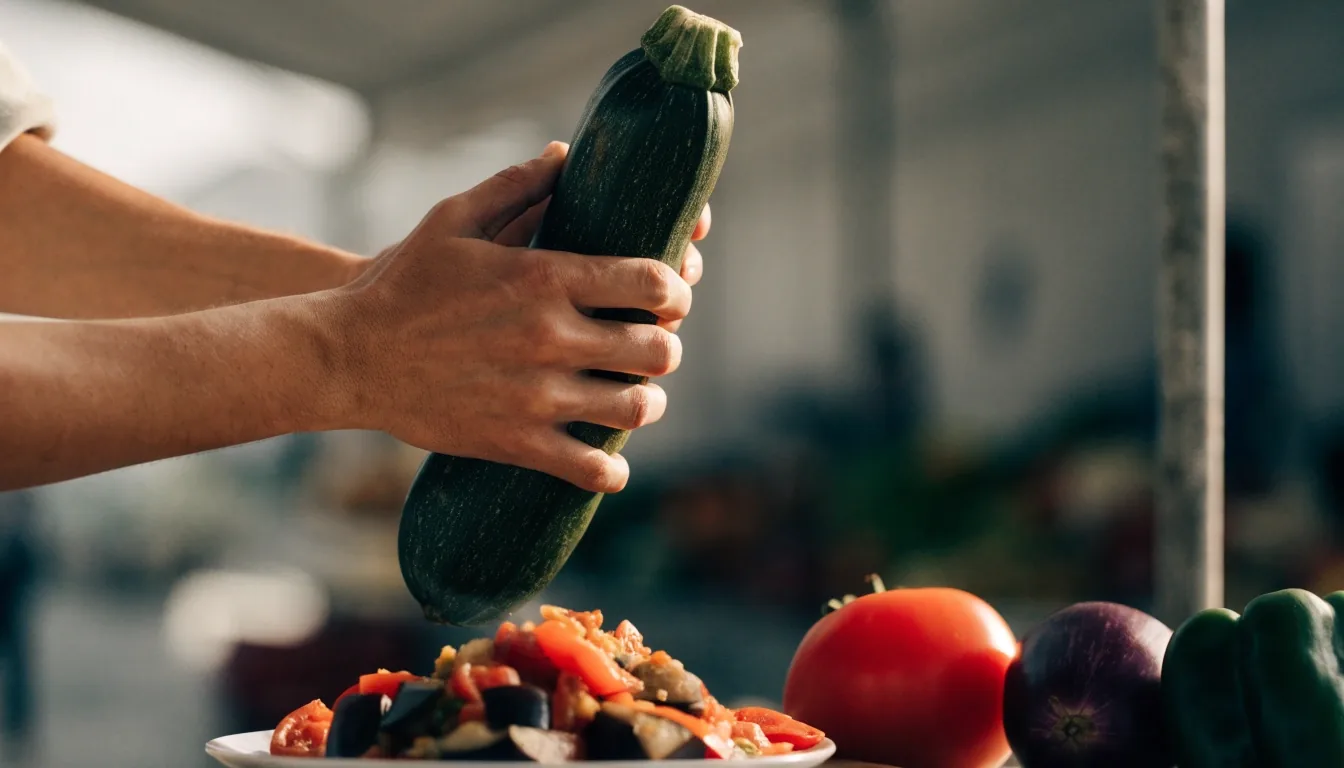
Weight and firmness tell you more than colour. Carry the check down the stall: press the tip, heft the fruit, look at the base. Five seconds each and you rarely take home a bad one.
Carrots
They should be stiff, with no bend at the tip. A carrot that flexes was cut a while ago.
Cucumbers
Heavy for their size, with taut, unwrinkled skin. Light in the hand means they have started to dry out.
Spinach
Dry leaves with no yellow patches, and stems that snap rather than bend. Wet spinach goes slimy within a day.
Beetroot
Hard all over, with no soft spot near the crown. If the leaves are still attached, they should look fresh too.
Kale
Crisp leaf edges, firm stems. If the edges feel soft, it has been sitting out warm for a while.
Pak choi
Firm at the base and bright green leaves. A pale-to-brown base is the tell that it has travelled too long.
Tomatoes
Smell them. A ripe tomato smells of tomato at arm's length from the crate, and no amount of pressing tells you more than that.
Fresh, frozen, or pre-cooked
There is no prize for buying everything fresh. The useful question is what you will actually cook this week. French supermarkets carry frozen spinach and pre-cooked beetroot next to the loose produce, and dried lentils sit in the dry-goods aisle for months — all three do real work on a weeknight.
Frozen
Spinach for quiche and purée. Bought by weight, cooked from frozen, no wilting race against the week.
Pre-cooked
Beetroot in the chilled aisle saves an hour of oven time and slices straight into a salad.
Dried
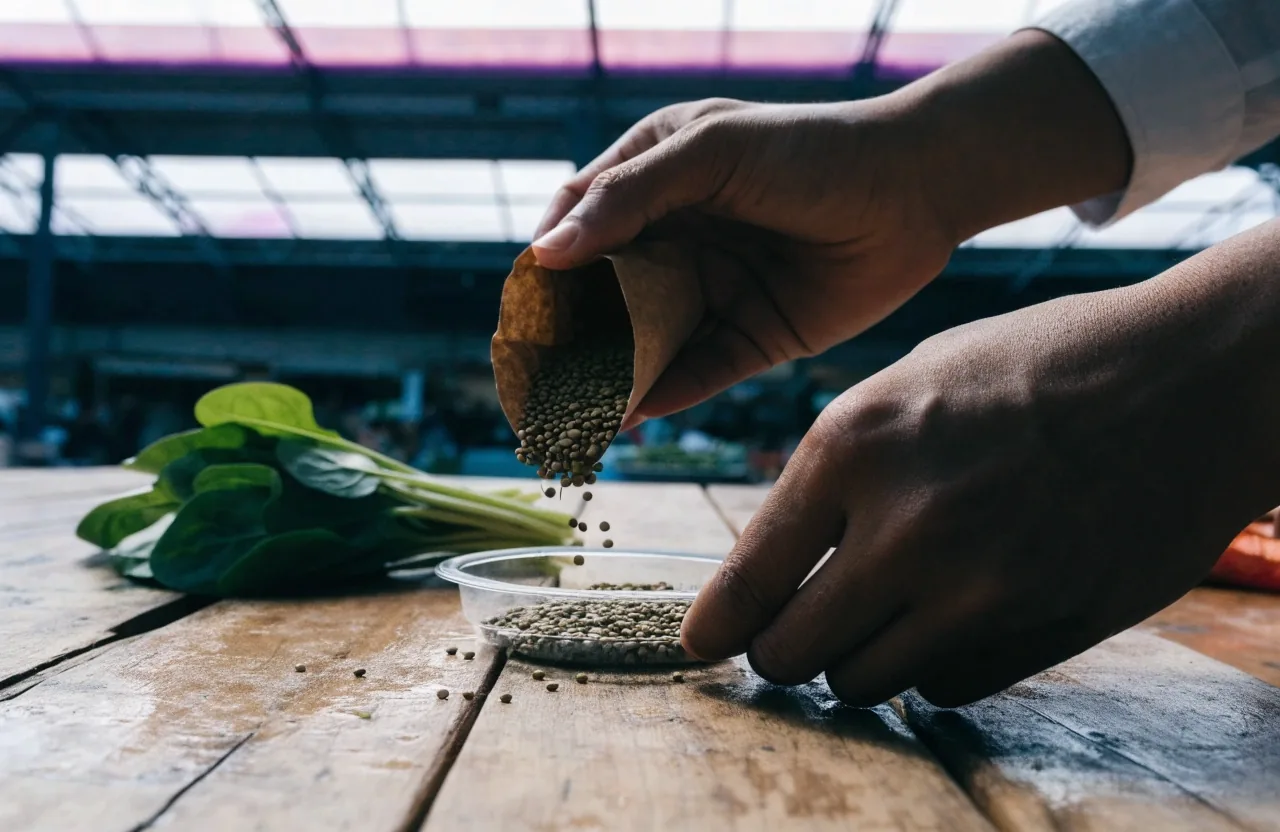
Lentilles du Puy keep for months in a cupboard and cost far less per meal than anything fresh.
Choose by the week, not by principle
If the plan for the next seven days is unclear, buy for two or three meals and top up later. A second short trip costs less than a drawer of spinach that never got cooked.
Roasting ahead
A tray of beetroot and carrots roasted on Sunday covers two extra dinners. Both keep well in the fridge and both reheat without turning to mush.
Planning a week of vegetables
Most vegetables last better when you plan two or three meals rather than buying for seven days. Sturdy roots can be bought in larger quantities; tender greens should be used within a few days. If you shop once a week at a market, buy the firm vegetables for the end of the week and the greens for the start, then fill the gaps with a short supermarket trip.
Start of the week
Spinach, kale and pak choi while they are still crisp. Cook them into anything that takes a few extra leaves.
Midweek
Cucumber and small salad vegetables, bought in a quantity you will actually eat in two days.
End of the week
Carrots, beetroot and lentils, which hold their quality through the week and give a proper roasted dinner.
Market day
Whatever is at its best that week. Buy one thing you did not plan for — that is what the market is for.
Shopping the market and the supermarket well
The two trips ask different things of you, and the useful habit is knowing which one you are on before you leave the house. Below is how the same week gets covered by both.
At the market
Buy what is at its best that morning
- Look at the crate the vendor is still filling; that is usually the freshest one.
- Ask when the produce came in. A direct answer tells you a lot about the stall.
- Buy the tender greens here. They will not survive a week in the fridge anyway.
- Choose your own roots rather than taking the tied bunch — size matters for roasting.
At the supermarket
Cover the week without a second visit
- Same vegetables, same quality, all year. Useful when you are cooking to a fixed plan.
- Frozen spinach and pre-cooked beetroot fill the gaps the market cannot.
- Dried lentils and pulses go at the bottom of the trolley and last for months.
- Roots bought loose let you pick the size you want instead of a fixed bag.
There is no correct split between the two. What matters is that you know which one you are going to and why — and that you come back with what you will cook.
See what is at its peak this monthBudget without cutting quality
Buying in season is the single most effective way to spend less without buying worse. A vegetable at its peak is cheaper and needs less work to taste good. Beyond that, a few small habits carry most of the saving.
Buy in season
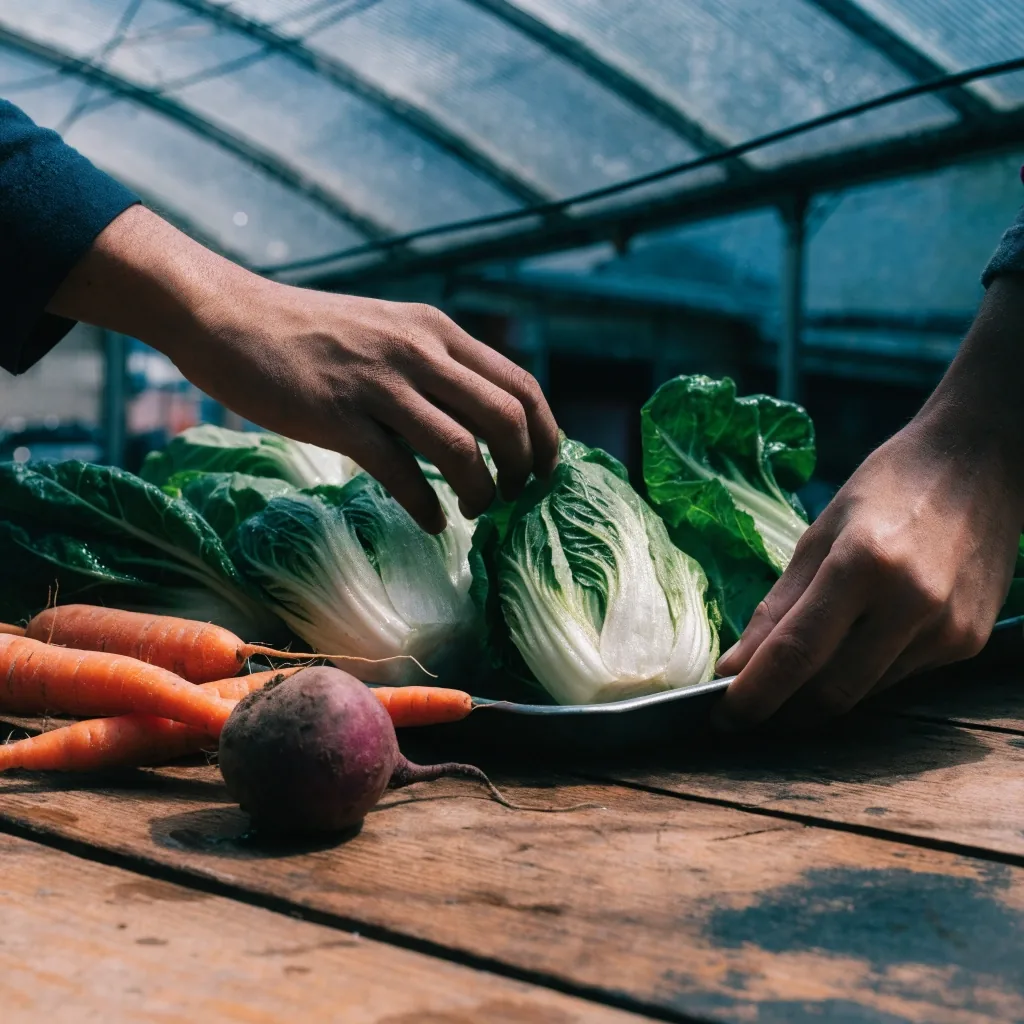
At peak, the same vegetable is cheaper and cooks better with less seasoning. The calendar is the budget tool.
Buy roots loose
A pre-bagged kilo of carrots is one size. Loose lets you pick the size the recipe is asking for.
Lentils stretch far
A bag of dried lentils costs very little per meal and holds its quality in a cupboard for months.
Out of season, switch
If something is expensive and out of season, buy it frozen for cooking, or cook something else entirely.
Small habits that save the week
The common mistakes are buying more than a week allows, storing everything the same way, and choosing by appearance alone. None of it is complicated, but the small habits make a real difference to what ends up on the plate on Thursday.
Keep spinach dry
Wet spinach goes slimy in a day. Dry it before it goes in the fridge, and it holds several days longer.
Strip the leaves
Beetroot and carrots keep better without their tops. Cut the leaves off before storing the roots.
Bag the kale
Kale in a sealed bag outlasts kale loose in the drawer. Same vegetable, different shelf life.
Separate the cucumber
Cucumber should not sit next to fruit that gives off ethylene — it speeds up the softening.
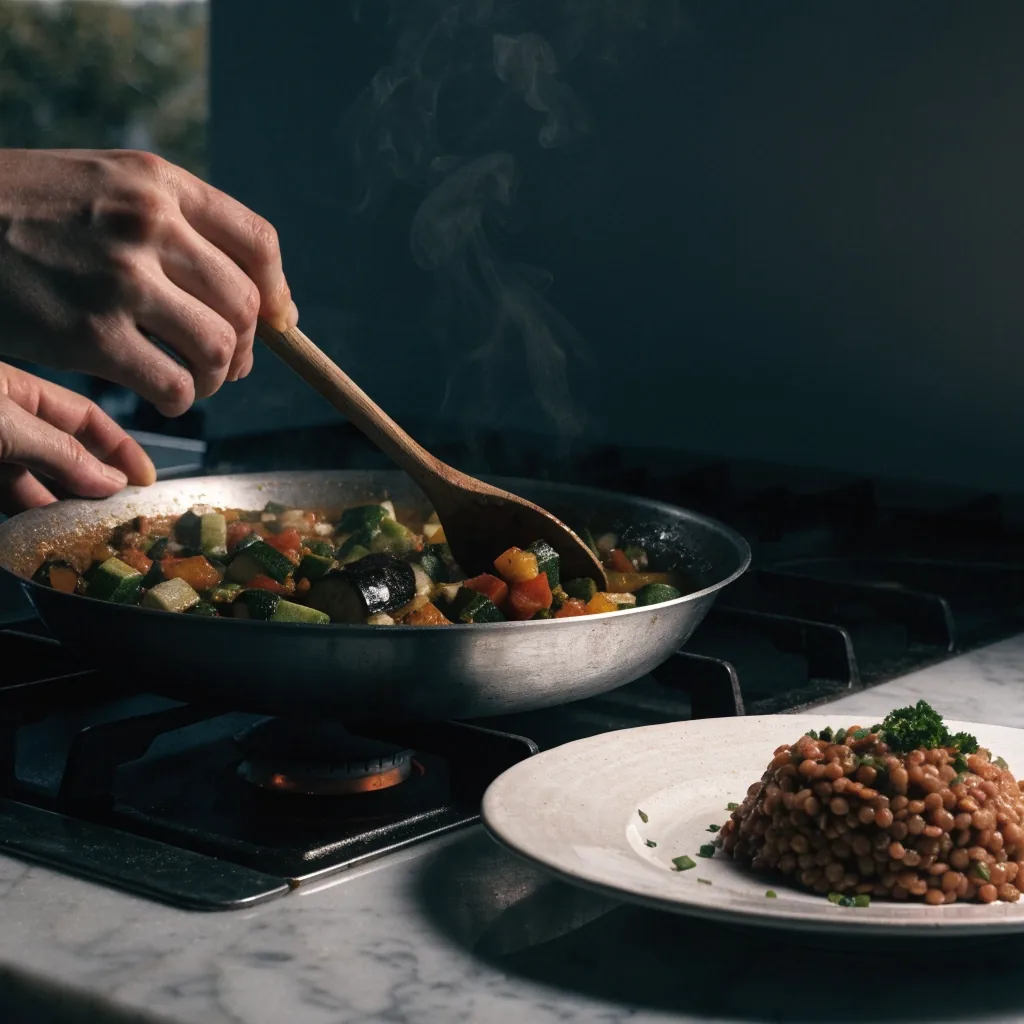
What the market is for, once you get home
Market vegetables reward plain cooking. A ratatouille built from firm courgettes and aubergines holds its shape; a lentil salad built from a bag of Lentilles du Puy comes together in twenty minutes and eats cold the next day. Both are recipes that lean on what you bought, not on what you add.
Cooking guidanceQuestions that come up at the stall
Short answers to the things people ask most often when they are new to buying vegetables in France.
Do you have to haggle at a French market?
No. Prices are usually fixed and haggling is not expected. The useful thing to say is a question: ask which crate came in freshest that morning and the vendor will tell you.
Is a market always better than a supermarket?
Not always. Markets win on timing and variety in summer; supermarkets win on consistency and on frozen and pre-cooked options. Most people use both, and there is no rule about the split.
What if the price is not marked?
Ask whether it is priced by the kilo or by the piece. Most produce goes by weight; leafy bunches and herbs often go by the piece. Vendors answer this all day and nobody minds the question.
How much should I buy for one week?
Plan two or three meals rather than seven days. Buy sturdy roots for the end of the week and tender greens for the start, and top up with a short supermarket trip if you need to.
Can I pay by card at the market?
Some stalls take cards, many do not. Cash is faster at a busy stall and a few small notes make the whole queue move. It is worth having both with you.
Month by month
Seasonal vegetable calendar
What is at its peak in France each month, so you know before you leave the house.
See the seasonal calendarVegetable by vegetable
Vegetable profiles
Beetroot, kale, lentils, pak choi, spinach and carrot, told in the same plain terms.
Read vegetable profilesIn the kitchen
Cooking with vegetables
Ratatouille, lentil salad and the everyday dishes that make a market bag worthwhile.
Read cooking guidanceQuestions about the guide, or something to add from your own market? The editorial address is open on weekdays.
Contact the guide