Vegetable Table France
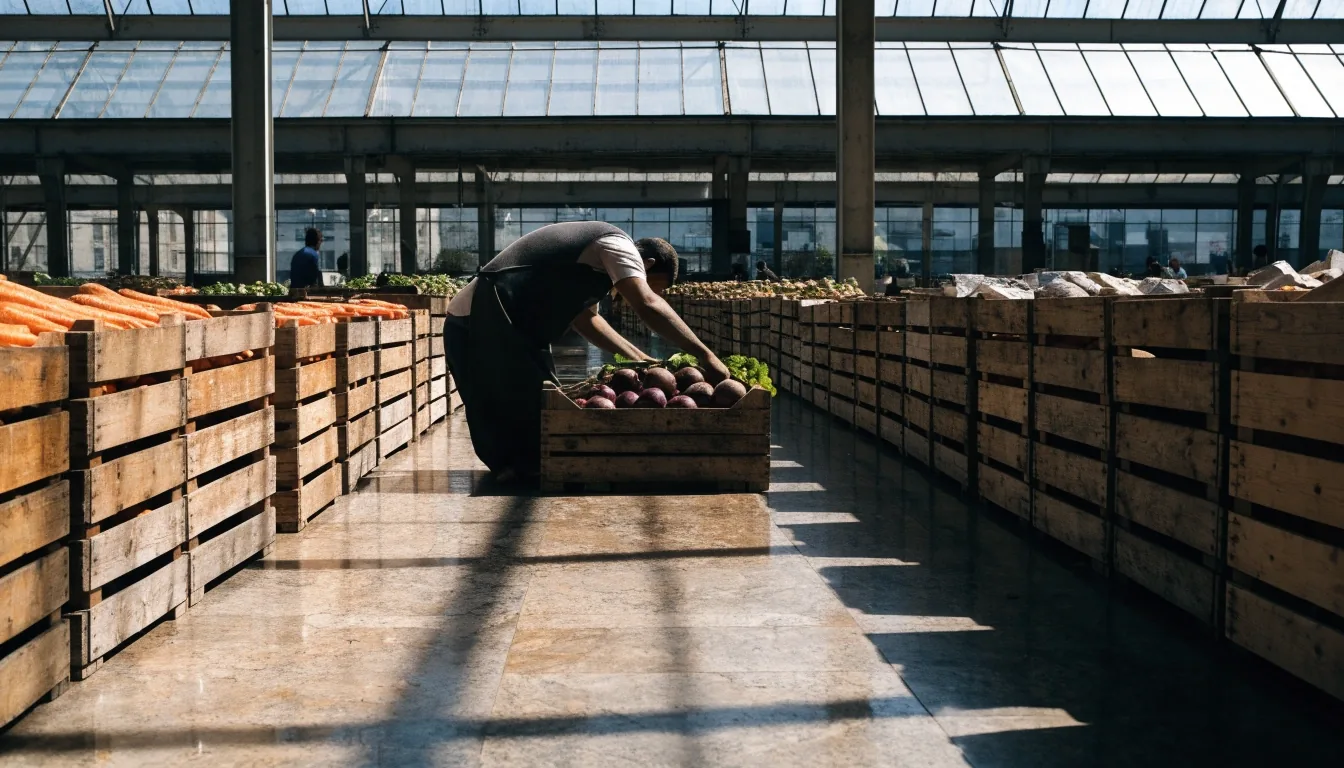
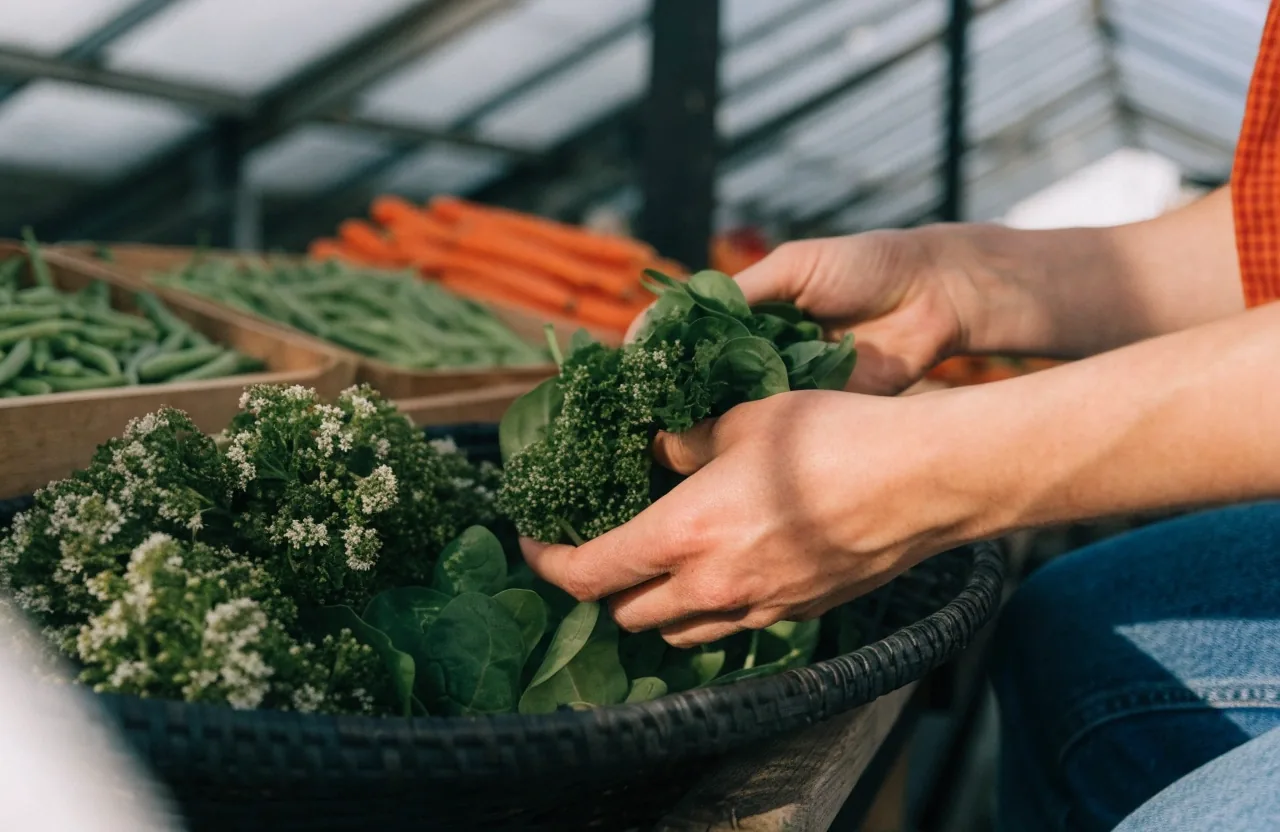
Noon light striping the floor of a glass-roofed market hall past crates of root vegetables and leafy greens

French markets, month by month

Which vegetables are in season in France

A month-by-month calendar for shopping French markets and cooking with better timing, whether you buy at a stall or a supermarket.

Guide Vegetable Table France
Place France, north to south
Covers All twelve months
Use it for Timing, not rules

Buying by timing rather than by rule

Buying vegetables in season in France is less about rules and more about timing. The same courgette that costs little and tastes sweet in July is expensive and watery in January, and no cooking technique fully fixes that. This calendar walks through the French year month by month, focusing on the vegetables covered elsewhere on the site so you can check what is worth buying before you shop. Regional variation is real, so treat the months as a guide rather than a schedule.

A stall in Nice and a stall in Lille are not selling the same thing in the same week. That gap is the useful part: once you know roughly when each vegetable turns up, you stop guessing at the market and start planning around what is actually good.

How to read this calendar

French seasonality shifts with latitude. A market in the south can have tomatoes in June while a northern one waits until July, and coastal regions run slightly later than inland ones. The months below give the general pattern for each vegetable we cover, with the stretch when quality and price are usually at their best.

Use it to plan a week, not to police your shopping. If a vegetable looks good out of season, buy it.

A shallow wooden tray of leafy vegetables with noon light falling across it on a matte white surface

The seasonal year, one mount at a time

Each entry pairs a month with the vegetables worth buying then, plus what French cooks usually reach for while they are on the stall.

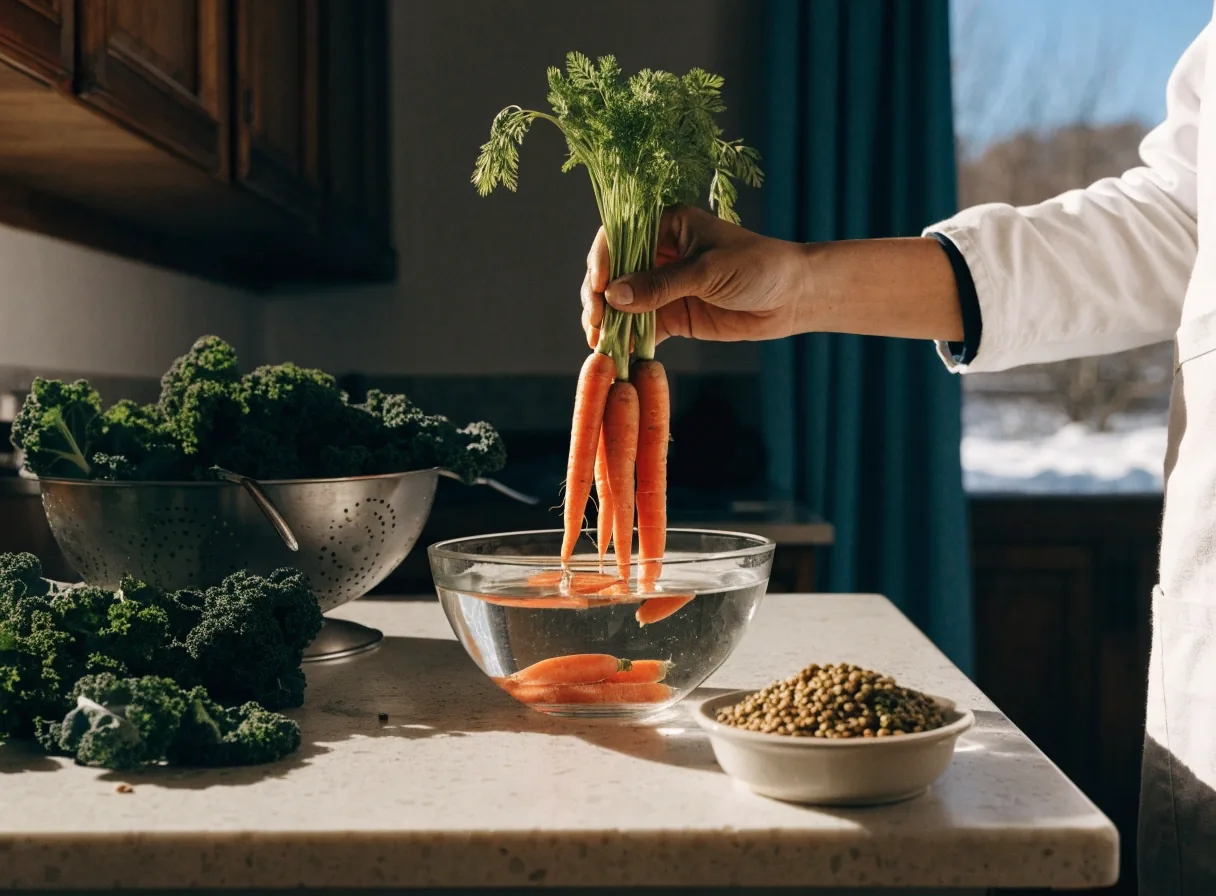
A bunch of carrots with tops and a bunch of kale on a matte white surface under hard noon light

Winter: roots, leaves, and pulses

Winter is the season for légumes racines and sturdy greens. Carrots stay good through the cold months and are at their most useful for soups, stews, and gratins, where long cooking suits them. Mâche and other hardy salad leaves handle low temperatures better than soft summer varieties. Spinach, sold fresh or frozen, is reliable all winter, and Lentilles du Puy need no season at all because dried pulses keep. This is also when kale is at its best in French markets, since cold improves its texture.

December through February is the stretch to lean on roots and brassicas: a gratin built from carrots, potatoes and onions will outlast anything leafy bought in the same week.

Vegetables Carrot, kale, spinach
Also good Mâche, lentils
Months December to February
Market state Plentiful and cheap
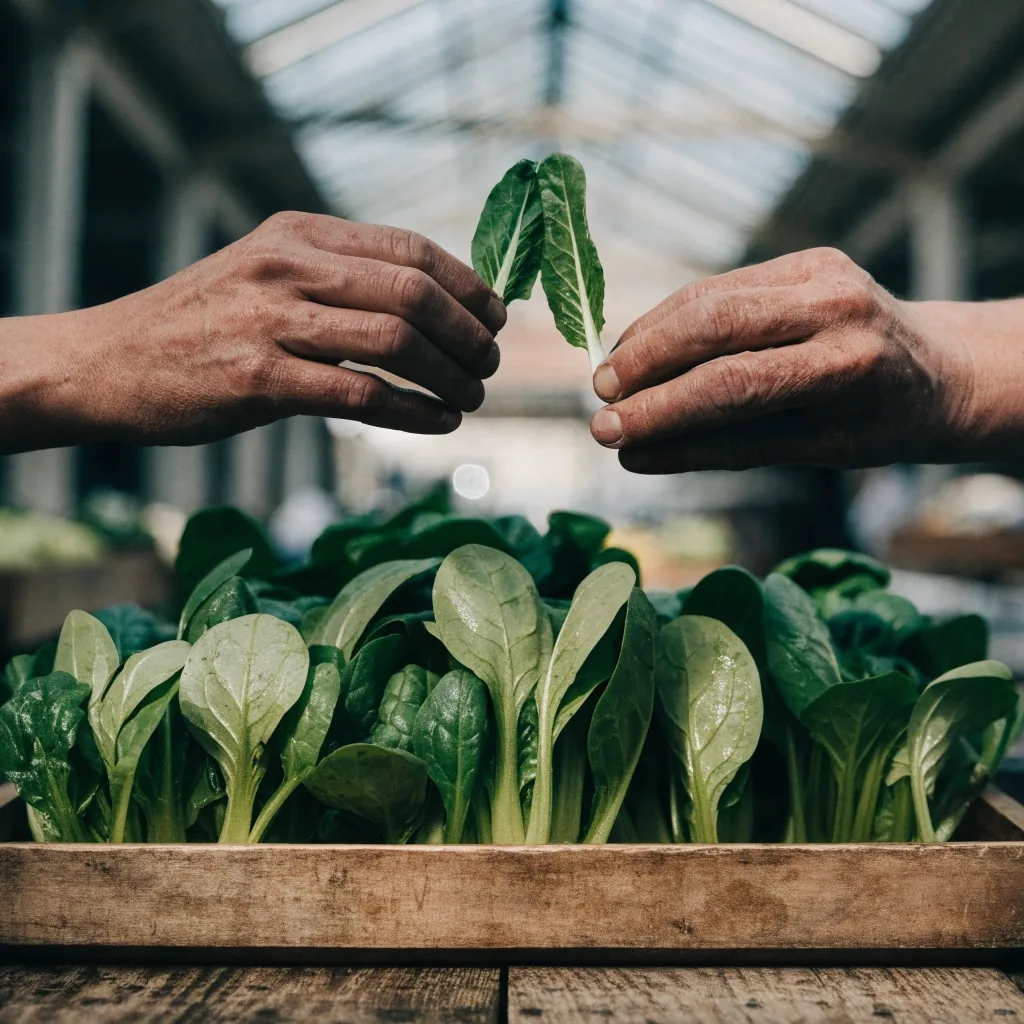
Young spinach leaves and small pak choi on a matte white surface in cool spring daylight

Spring: the first green vegetables

Spring arrives gradually. Spinach and early salad greens appear first, followed by the lighter leafy vegetables. Pak choi can be found through much of the year in urban markets, but spring and autumn are when it looks freshest. Cucumber starts appearing towards the end of the season, still expensive and better saved for summer. Kale continues from winter. If you are planning a market trip in April, expect a changing stall rather than a full one.

Vegetables Spinach, pak choi
Also good Salad leaves, kale
Months March to May
Market state Thin, then filling out
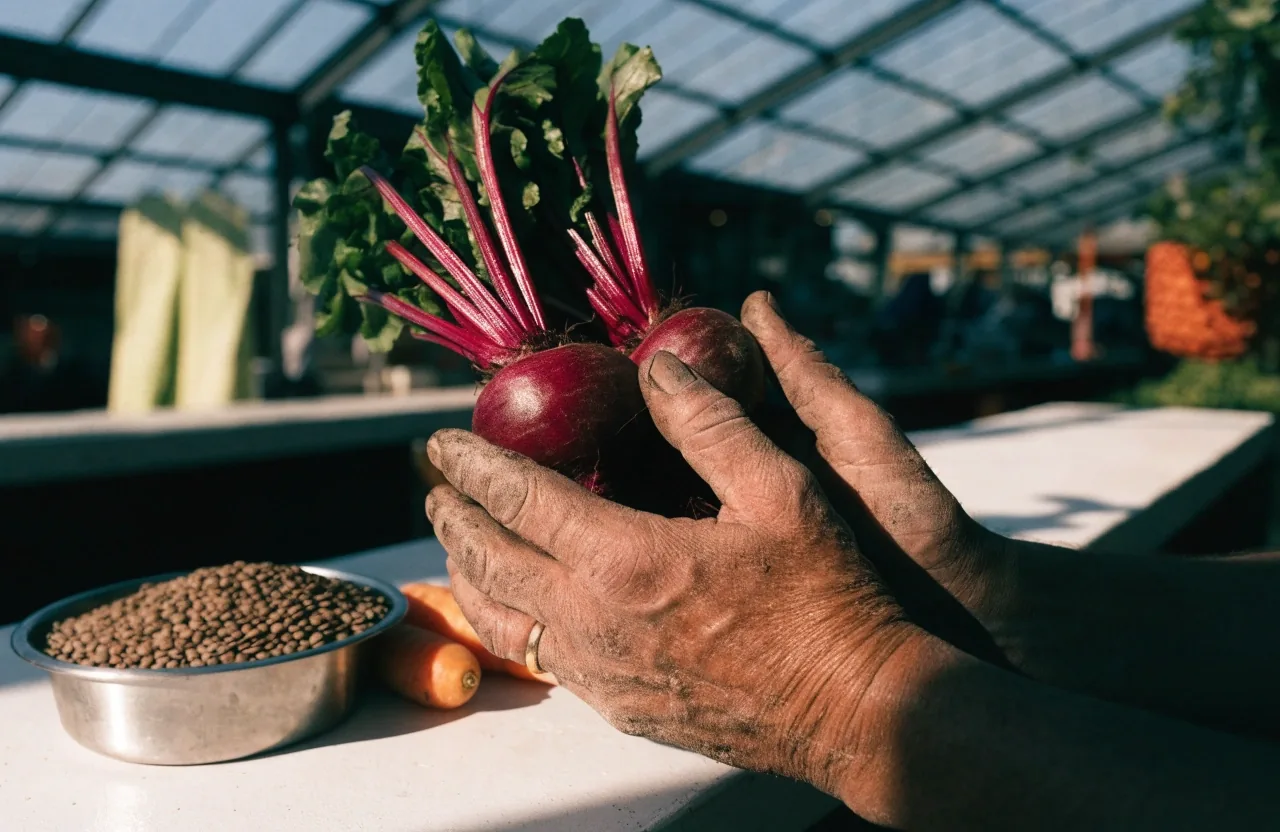
Beetroot with greens and a handful of dried green lentils on a matte white surface in autumn light

Autumn: transition and storage

Autumn is a transition month by month. Tomatoes fade, peppers hold on, and the root vegetables return. Carrots improve again after the summer heat, and beetroot is a natural fit for roasted dishes as the weather cools. Kale comes back into its own, and lentils move from summer salads into warm dishes with carrots and onions. This is the point in the year when a pantry stocked with légumes secs starts earning its space.

Vegetables Carrot, beetroot
Also good Kale, lentils
Months September to November
Market state Roots returning
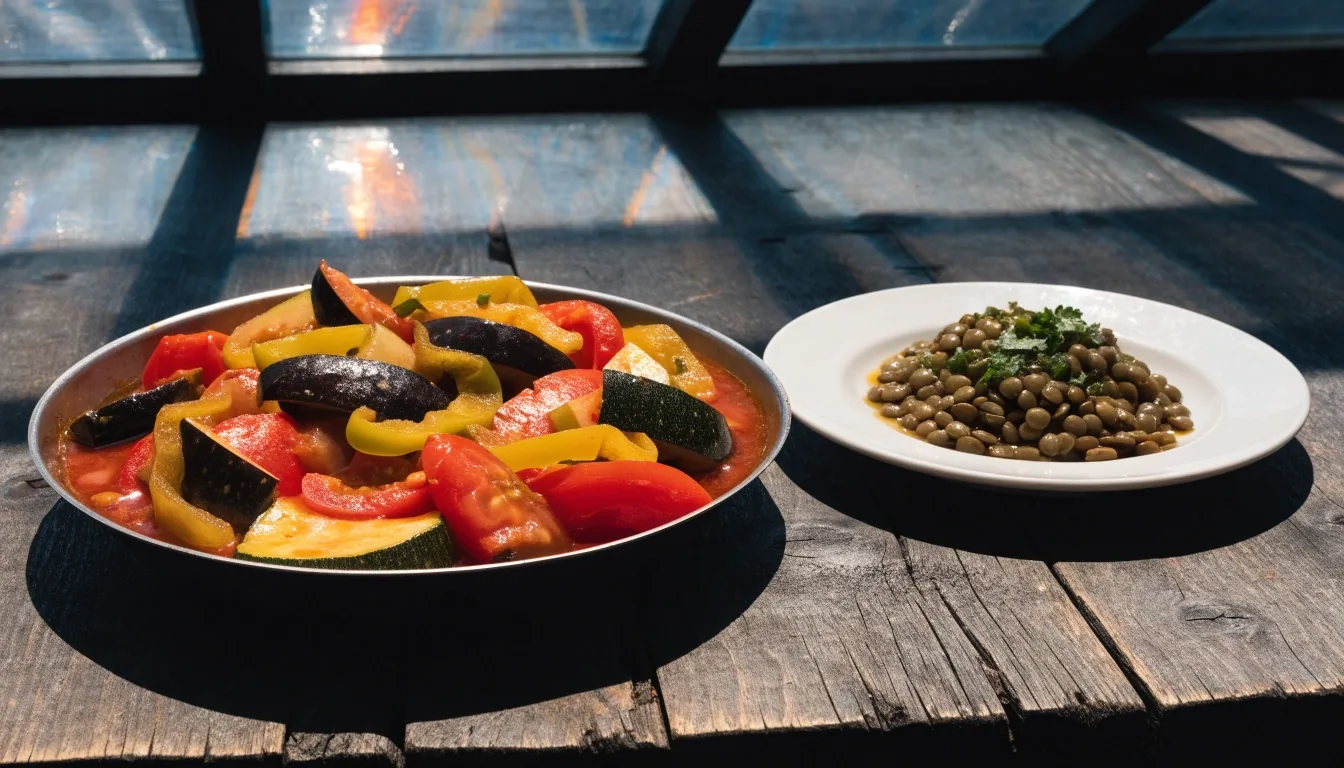
A shallow pan of ratatouille and a plate of lentil salad in hard noon light through a glass roof

Summer: ratatouille weather

Summer is the reason ratatouille exists. Tomato, zucchini, eggplant, and pepper all arrive together, and the dish is built around that overlap. Haricots verts are at their peak and need very little cooking. Cucumber is at its cheapest and best, which is when chilled salads and crudités make sense. Beetroot is available year-round but works well in summer salads alongside the lighter vegetables. This is the season to buy more than you need and cook it all at once.

Vegetables Tomato, zucchini, eggplant
Also good Pepper, haricots verts
Months June to August
Market state Peak and cheapest

What the calendar does not decide

Seasonality is a shopping tool, not a restriction. Supermarkets in France carry most vegetables all year, and frozen spinach and pre-cooked beetroot are useful regardless of the month. If you want a cucumber salad in December, make one. The calendar is there to tell you when a vegetable is likely to be good value and good flavour, so the decision stays yours.

It also does not account for the weather in a given year. A cold spring pushes everything back by a fortnight or more, and a warm autumn stretches the tomato season. The month labels are a baseline to compare against, not a promise about the Saturday in front of you.

Matching the calendar to your cooking

The practical use of a calendar is planning. If you know ratatouille is a July and August dish, you stop trying to make it in March. If you know carrots are solid from October through March, you can build winter meals around them without checking. Our vegetable profiles page covers how each vegetable is typically bought and prepared, and the cooking guidance page shows what to do with whatever the calendar gives you.

Calendar Seasonal vegetables in France
Editorial Written for home cooks
Scope Markets and supermarkets
Standard A guide, not a schedule
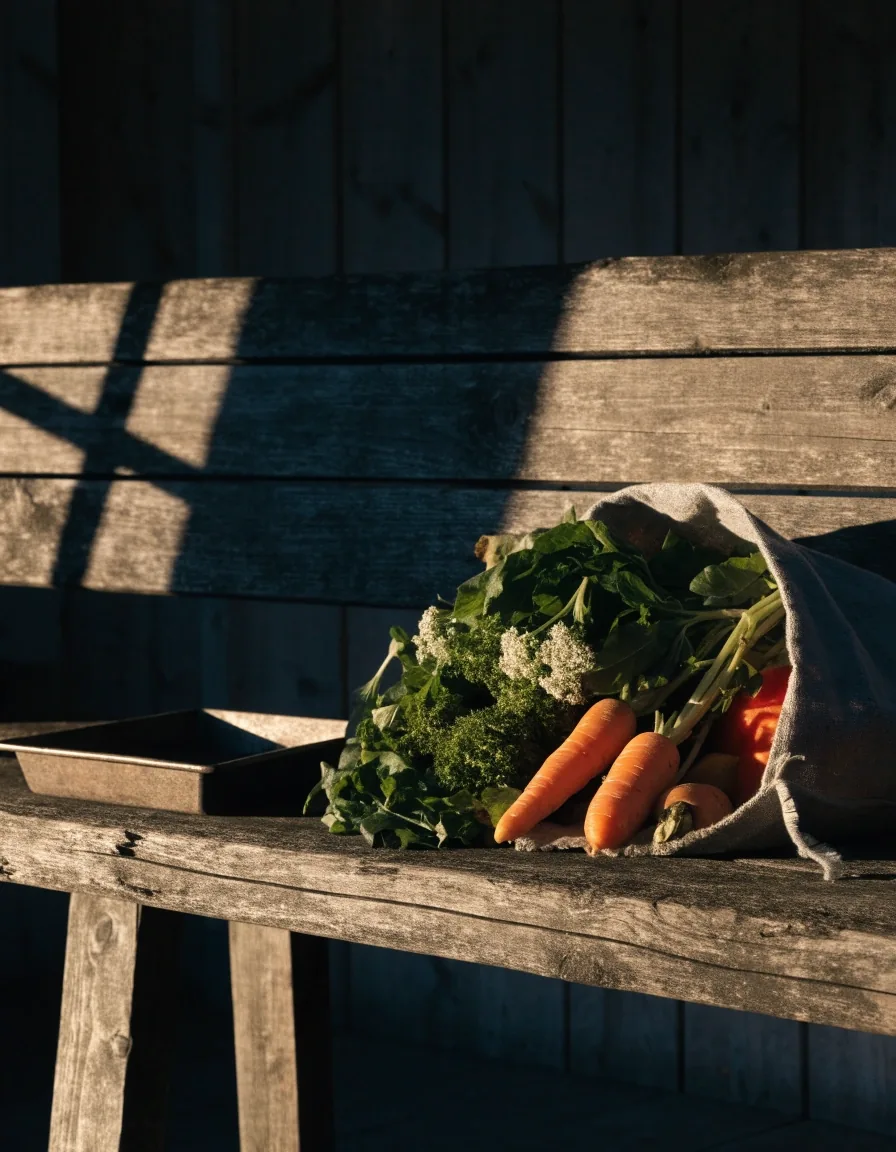
A cloth market bag of leafy greens resting on a wooden bench in afternoon light

Cooking by season becomes a habit

Cooking by season becomes easier once it stops being a project. Buy what looks good, cook it that week, and let the calendar inform rather than dictate. After a year of shopping this way, most people stop needing to check: they simply notice that the tomatoes have arrived.

Start with one vegetable you buy every week and track it against the months above. The first time you catch a courgette at its best price and flavour, the calendar stops being a reference page and becomes the way you shop.

Why does the same vegetable taste different in June and November?

Growing conditions change what a vegetable is made of. A courgette grown in strong summer light ripens quickly and holds more sugar; one grown under glass in January is mostly water. That is why the calendar marks the months when a vegetable is usually worth its price.

Do frozen and pre-cooked vegetables still count?

Yes. Frozen spinach and cooked beetroot are picked and packed close to their season, so they sit outside the fresh calendar entirely. Treat them as pantry staples and use the months here for what you buy loose.

How do I use this page in a normal week?

Check the current month before you shop, pick two or three vegetables from the list, and build the week around them. It takes about a minute and saves the usual guessing at the stall.

Where can I read more about a specific vegetable?

The vegetable profiles cover beetroot, kale, Lentilles du Puy, pak choi, spinach and carrot — how each is bought, stored and prepared. The cooking page follows the same vegetables into dishes.

Questions about the guide itself can go to our contact page, or write to [email protected]. Vegetable Table France, 18 Rue de la Verrerie, 75004 Paris, France.